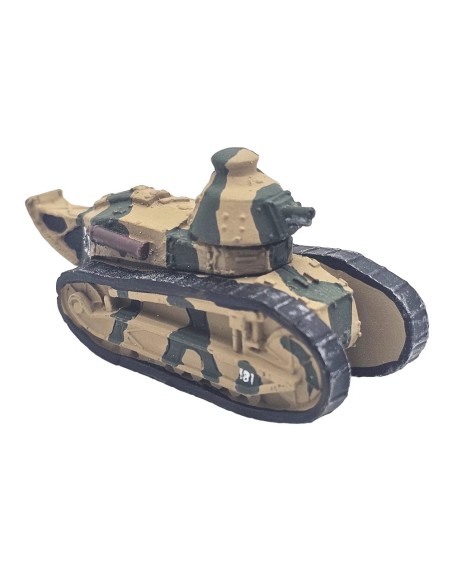
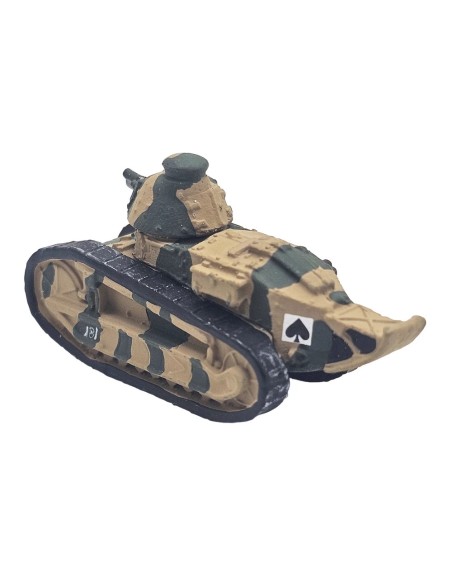
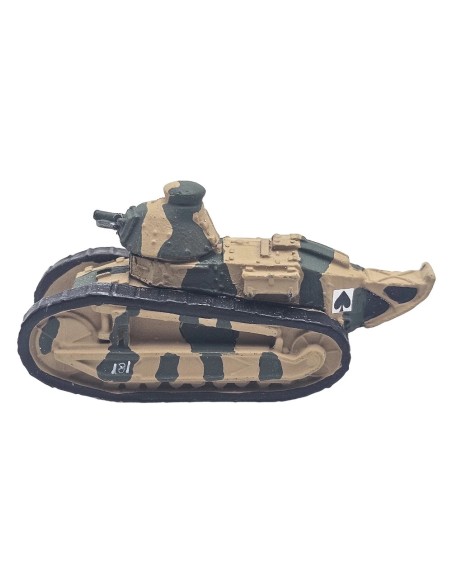
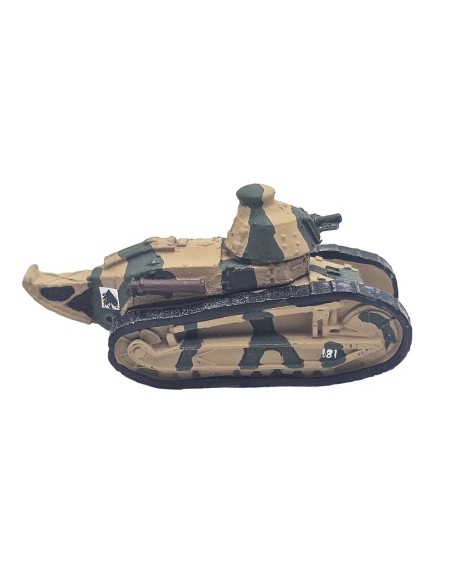
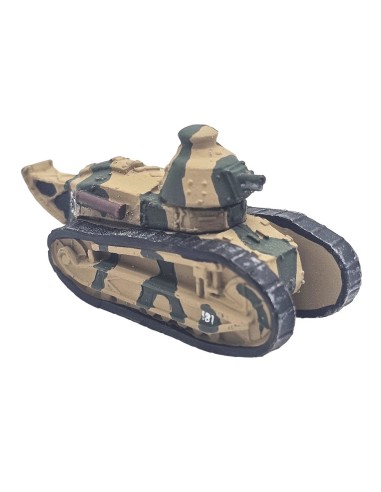
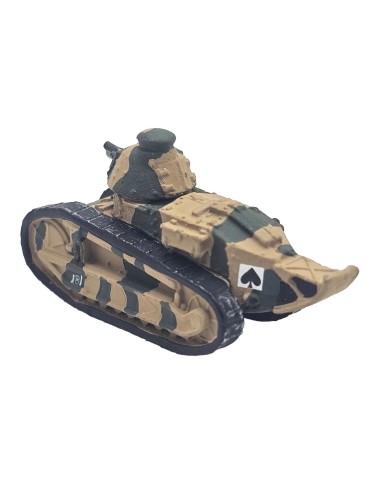
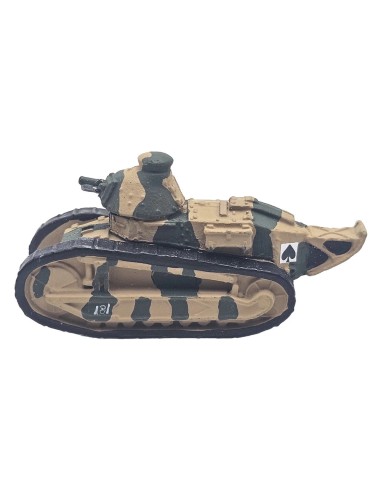
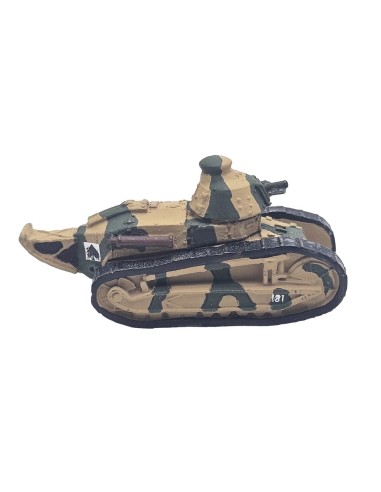
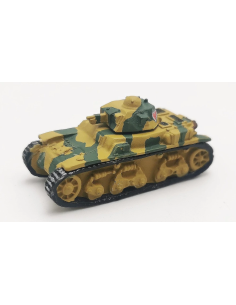
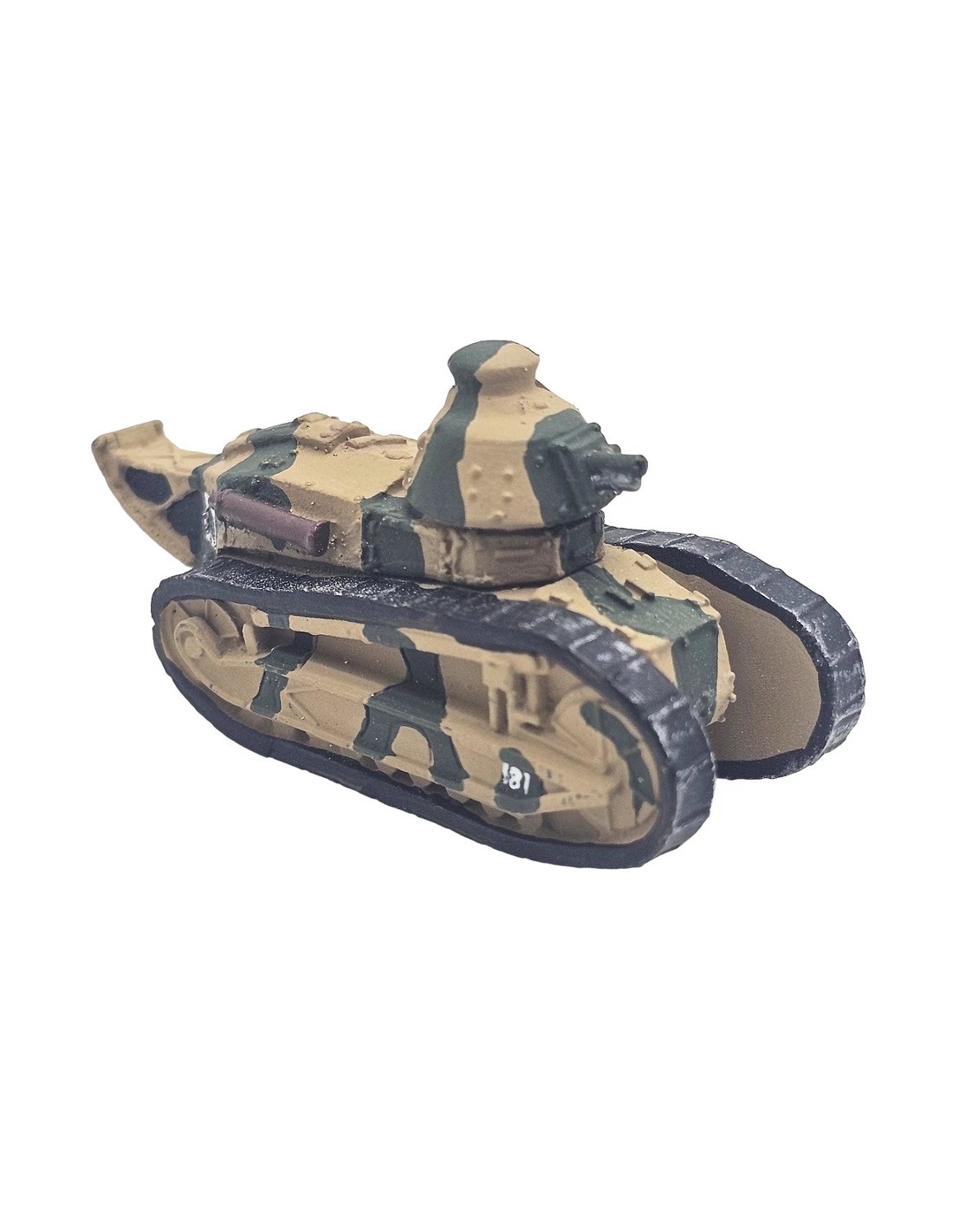
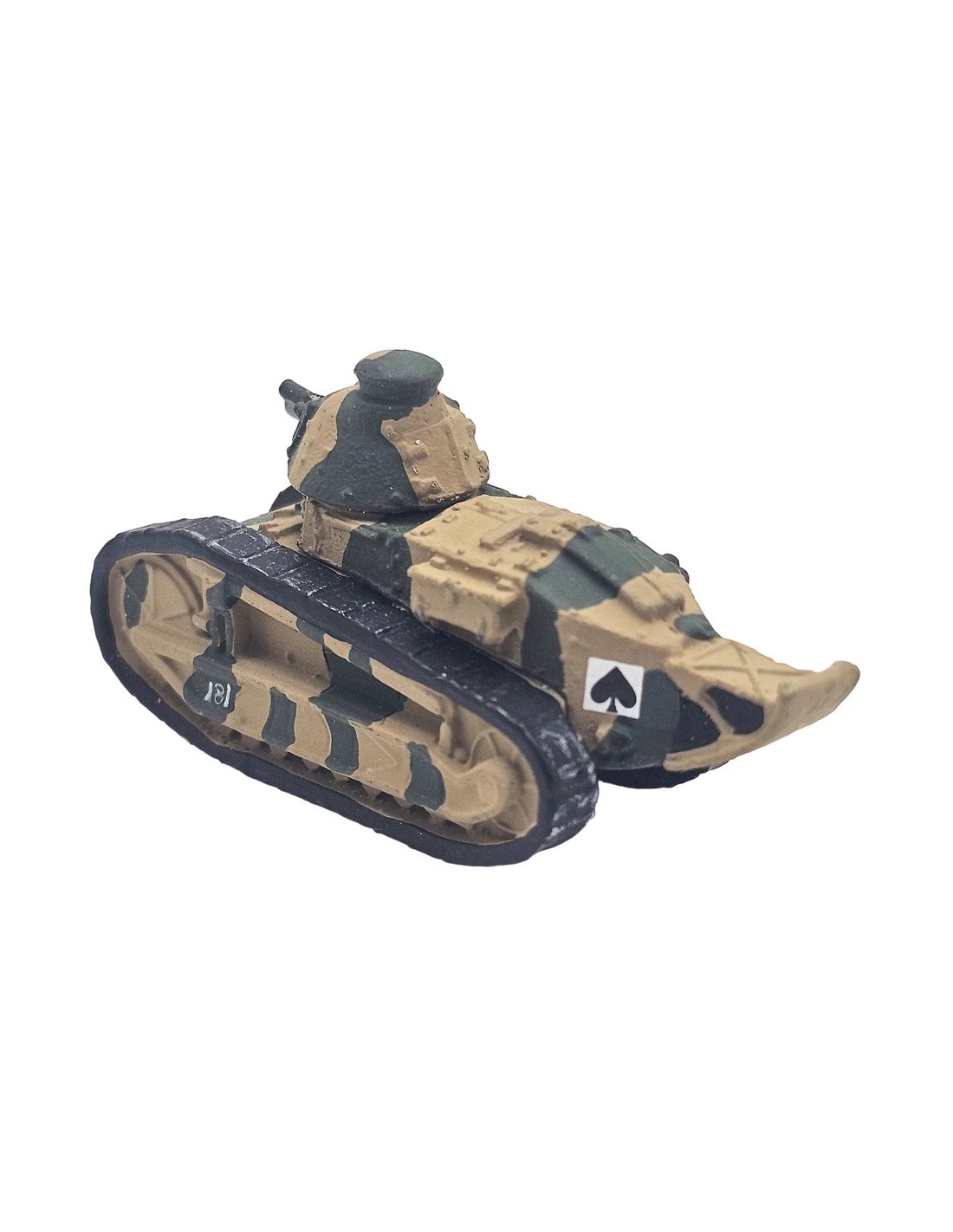
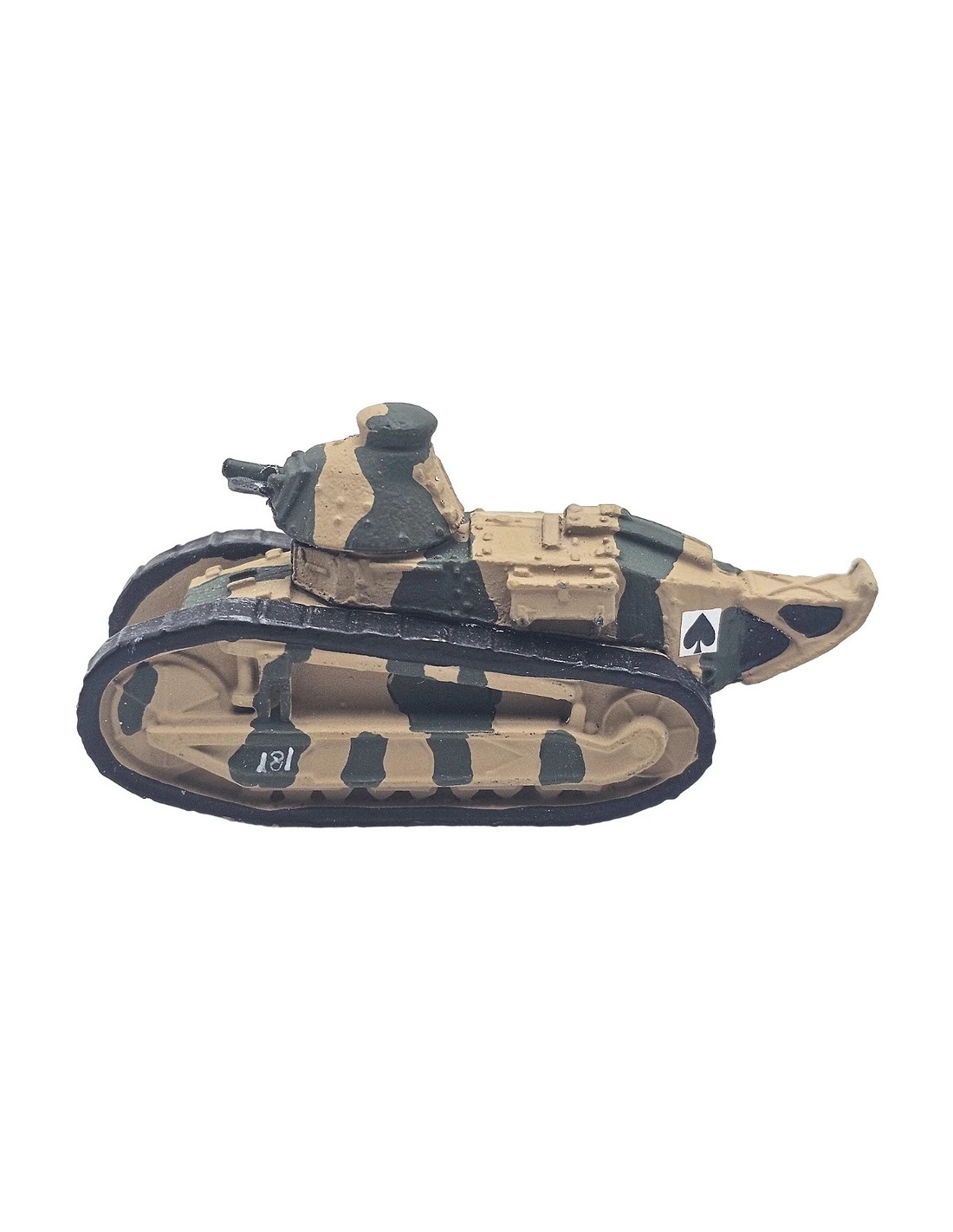
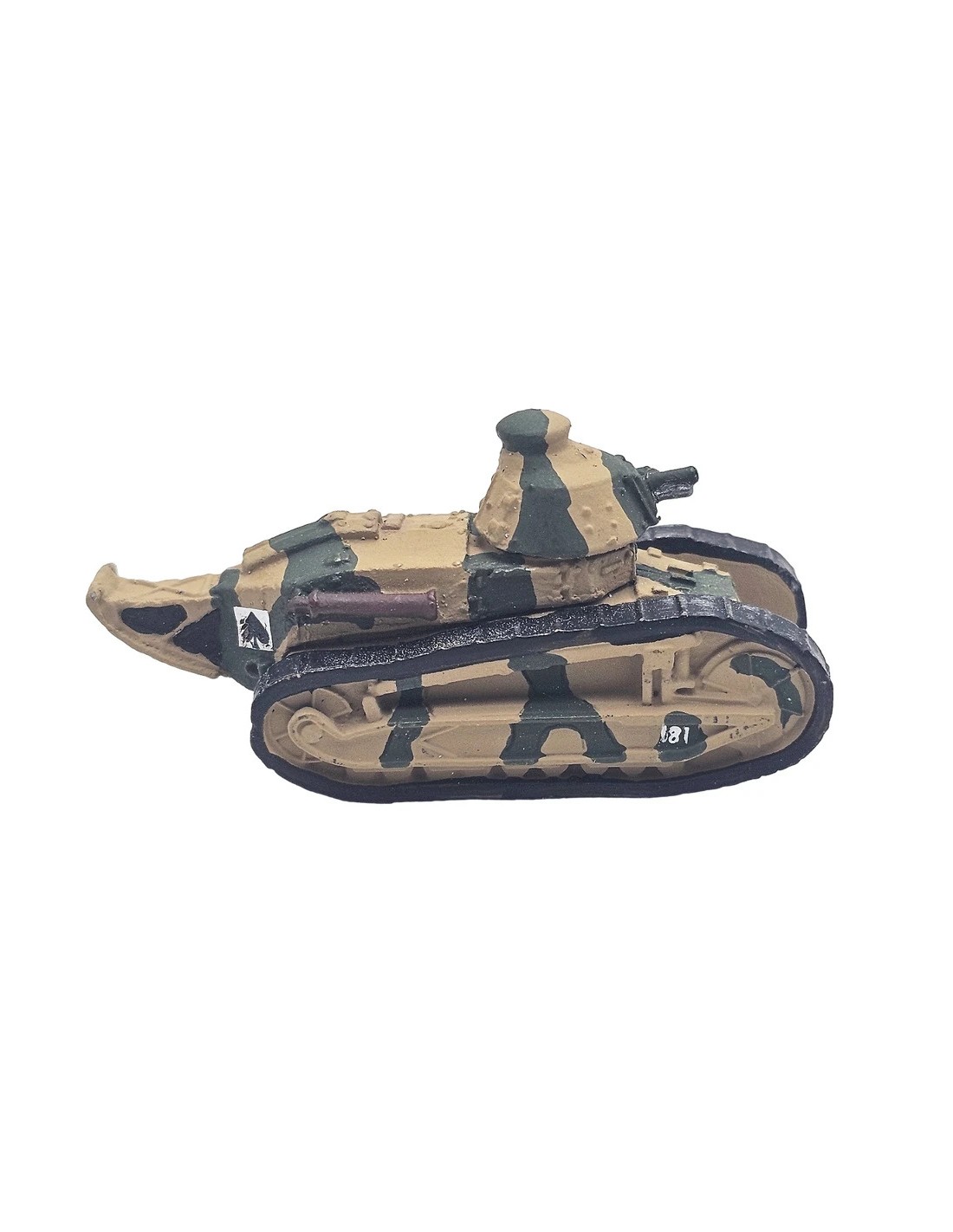
As a result of the losses and lessons learned in the Rif War, the Spanish government determined that tanks were necessary to suppress the rebellion. Determined to equip the Spanish army with tanks, the Spanish government contacted the French. On June 23, 1919, the first Renault FT-17, with an octagonal turret, arrived in Spain for testing. When the tests proved satisfactory, the decision was made to acquire eight FT-17s armed with 7mm Hotchkiss machine guns and two with 37mm Puteaux cannons, but the deal was canceled by the French government.
Despite this, in August 1921, ten Renault FT-17s armed with 7mm Hotchkiss machine guns were purchased and assigned to the Infantry Section of the Central Firing School. A few weeks later, another FT-17 with the same specifications was acquired, along with an FT-17TSF communications tank to serve as a command tank. These formed a company (comprising two sections of five tanks each) destined for Morocco. One of the tanks, number 5, remained at the School for training purposes. Subsequently, six new tanks were purchased to replace those lost, allowing for the formation of a new section for the Alhucemas landing.
The Renault FT-17s, along with the Schneider tanks, constituted the first armored vehicles of the Spanish Army. Their first action in the Spanish Army took place on March 14, 1922, against the positions of Ámbar and Tuguntz, without success. They were also used in the Alhucemas Landing, where they proved ineffective.
Once the campaign in Morocco ended, the FT-17s returned to the Iberian Peninsula, where they were integrated into the Assault Tank Group. In 1931, two infantry regiments, the Light Tank Regiments, were formed, each composed of five tanks, using the ten survivors from the Moroccan campaign. One company was stationed in Madrid and the other in Zaragoza, forming the 1st Madrid Tank Regiment and the 2nd Zaragoza Tank Regiment, which consisted of a tank battalion with three companies and three sections of five tanks each, three of which were armed with cannons and two with machine guns. Before the outbreak of the Civil War, Renault FT-17s participated in the actions at Cuatro Vientos in 1930, in May 1931, and in Oviedo during the 1934 Asturian miners' strike. When the Civil War broke out, five of these tanks remained with the Republican side; two of them participated in the attacks on the Montaña and Campamento barracks, as well as supporting the militias sent to the Alto del León pass until they were relieved on July 27. They also took part in the defense of Mérida and Don Benito, and in the counterattack against Mérida. On September 5, two of the FT-17s were lost in Talavera de la Reina (Toledo), and the remaining three were used in the attacks against Maqueda between September 22 and 24. Upon returning to Madrid, they actively participated in the city's defense during the fighting in the Casa de Campo, where the three survivors were destroyed during the winter of 1936. On the Northern Front, on August 9, 1936, three FT-17s armed with Puteaux cannons arrived in Bilbao from France, later joined by three more disembarked from the ship Cristóbal Colón in Santander, armed with machine guns. Then, in March 1937, the Autom landed 16 FT-17s in Santander, nine of them armed with Puteaux cannons, from Poland. These tanks were used primarily in the Battle of Santander.